

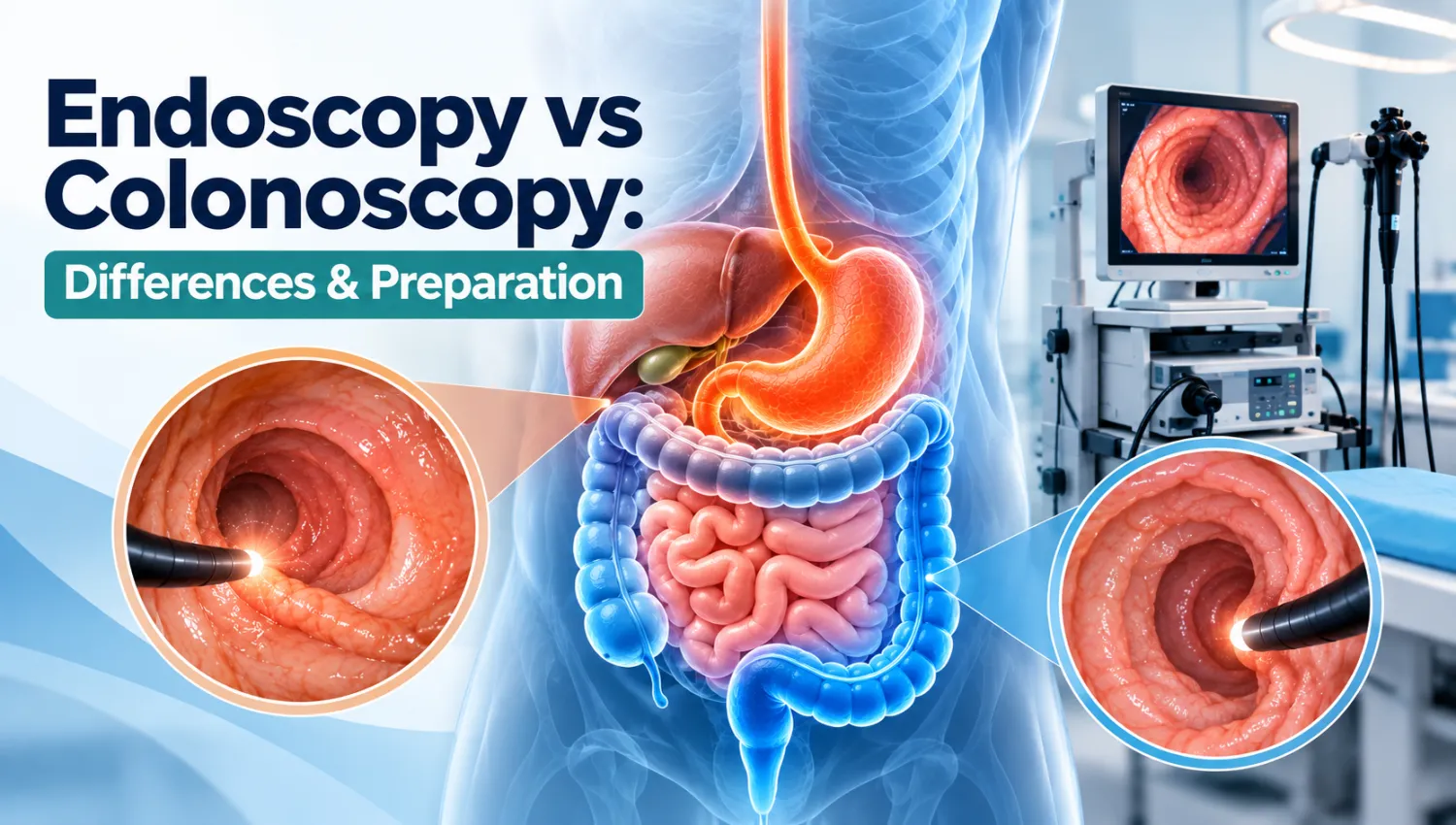
The main difference is where the scope goes. A standard endoscopy examines the upper digestive tract: the food pipe (oesophagus), stomach and the first part of the small intestine. A colonoscopy examines the lower digestive tract: the large intestine (colon) and rectum. They are not rival tests, because they look at different organs and answer different questions.
That is also why patients are sometimes told they need one, the other, or both. This guide explains what each test shows, how to prepare, and how doctors decide.
Is endoscopy the same as colonoscopy?
Not quite. “Endoscopy” is the general name for any test in which a thin, flexible tube with a light and camera is passed into the body. Colonoscopy is one type of endoscopy.
In everyday conversation in India, though, “endoscopy” usually means upper GI endoscopy (also called gastroscopy or EGD). That is the meaning used in this article. Other types include sigmoidoscopy (the lower part of the colon only), enteroscopy and capsule endoscopy (for the small intestine) and endoscopic ultrasound.
You can read more about each test on our pages for [LINK TO CONFIRM: existing endoscopy page] and [LINK TO CONFIRM: existing colonoscopy page].
Endoscopy vs colonoscopy at a glance
|
|
Upper GI endoscopy |
Colonoscopy |
|---|---|---|
|
Where the scope enters |
Through the mouth |
Through the anus |
|
What it examines |
Oesophagus, stomach, first part of the small intestine (duodenum) |
Whole large intestine and rectum; sometimes the last part of the small intestine |
|
Typical reasons |
Heartburn that does not settle, difficulty swallowing, upper abdominal pain, vomiting blood, black stools, iron deficiency |
Blood in stool, long-standing change in bowel habit, chronic diarrhoea, iron deficiency, polyp or cancer screening, suspected colitis |
|
Preparation |
Fasting for several hours |
Bowel-cleansing preparation, with diet changes the day before |
|
Usual duration |
About 5 to 15 minutes |
About 20 to 45 minutes, longer if polyps are removed |
|
Sedation |
Throat spray or sedation, depending on the case |
Usually sedation |
Times and sedation practices differ between hospitals and patients.
What upper GI endoscopy can detect
Upper GI endoscopy lets the doctor see the lining directly and take small tissue samples (biopsies) painlessly. It is used to find or assess:
- Acid reflux damage (oesophagitis) and Barrett’s oesophagus
- Stomach or duodenal ulcers and gastritis
- Helicobacter pylori infection (through biopsy)
- Coeliac disease (through duodenal biopsies)
- Enlarged veins in the food pipe or stomach (varices), which are common in advanced liver disease
- Narrowing of the oesophagus, growths and cancers of the upper tract
- The source of bleeding from the upper gut
It can also treat problems during the same procedure, for example by banding varices, stopping bleeding, widening a narrowed segment or removing a foreign object.
What colonoscopy can detect
Colonoscopy examines the entire lining of the large intestine. It is used to find or assess:
- Polyps, small growths that can be removed during the test, which is how colonoscopy helps prevent colorectal cancer
- Colorectal cancer
- Inflammatory bowel disease, such as ulcerative colitis and Crohn’s disease
- Bleeding sources, including bleeding diverticula and abnormal blood vessels
- Causes of long-standing diarrhoea, often with biopsies
- Narrowing or other abnormalities of the colon
It does not examine the stomach or the oesophagus, and it cannot reach most of the small intestine, so symptoms from those areas need other tests.
Why a doctor may recommend one, the other or both
The choice depends on your symptoms, not on which test sounds more thorough. These examples show how the thinking usually works.
- Burning in the chest and difficulty swallowing: upper GI endoscopy. A colonoscopy would not look at the area causing symptoms.
- Blood mixed with stool or a recent change in bowel habit: colonoscopy.
- Black, tarry stools: upper GI endoscopy first, because the blood often comes from the stomach or duodenum. Colonoscopy may follow if no cause is found. Black stools can also be caused by iron tablets, so tell your doctor what you take.
- Iron-deficiency anaemia without an obvious cause: often both tests, because bleeding can come from either end of the digestive tract. Guidelines advise evaluating both in many adults, particularly men and women after menopause.
- Unexplained weight loss or persistent abdominal symptoms: one or both, depending on the pattern and other tests.
- Screening without symptoms: colonoscopy, or another colorectal cancer screening method, at the age and interval your doctor recommends. For people at average risk, several guidelines suggest starting between ages 45 and 50. A family history of colorectal cancer or polyps usually means starting earlier.
Sometimes both tests are done in the same visit, under one sedation. Your doctor can tell you if this is suitable.
How to prepare
The exact instructions come from your hospital and are tailored to you. In general:
For upper GI endoscopy
- Do not eat for several hours before the test. Many units ask for about 6 to 8 hours without food, with clear fluids allowed until closer to the procedure.
- Tell the team about diabetes, heart or lung disease, allergies, and medicines such as blood thinners, aspirin, insulin and diabetes tablets.
- If you are sedated, arrange for someone to take you home.
For colonoscopy
- The bowel must be clean for the doctor to see clearly. You will normally follow a low-fibre diet for a day or more, then a clear-liquid diet and a laxative solution, often split between the evening before and the morning of the test.
- Poor preparation can hide polyps and may mean the test has to be repeated, so follow the instructions closely.
- Do not stop blood thinners or diabetes medicines on your own. Ask your doctor for a plan.
- Arrange an escort and avoid driving or important decisions for the rest of the day after sedation.
Are the tests safe and painful?
Both tests are widely performed and are generally safe. Most people feel little or no pain under sedation, though bloating, a sore throat (after endoscopy) or cramps and gas (after colonoscopy) can occur for a few hours. Serious complications such as bleeding or a tear in the gut wall are uncommon, and the risk is slightly higher when polyps are removed or treatment is done. The doctor will discuss risks and alternatives, such as stool tests, CT-based imaging or capsule endoscopy, before you agree to the procedure.
Seek urgent medical help after either test if you have severe or worsening abdominal pain, fever, repeated vomiting, vomiting blood, black stools or more than a little rectal bleeding.
Endoscopy and colonoscopy in Faridabad
If you have been advised to have an endoscopy or colonoscopy and want a specialist opinion first, Dr. Ram Chandra Soni is a gastroenterologist and hepatologist (MBBS, MD, DM in Gastroenterology) and Chairman of Gastroenterology & Hepatology at Accord Superspeciality Hospital, Faridabad, according to his profile. His profile lists diagnostic and therapeutic endoscopy, colonoscopy, ERCP, enteroscopy and endoscopic ultrasound among his areas of work. You can see the full list on the services page.
Bring any previous scan or endoscopy reports, blood test results and a list of your medicines. These help the doctor decide which test is truly needed.
Conclusion
Endoscopy looks at the upper digestive tract and colonoscopy looks at the lower. The right test depends on where your symptoms come from, and sometimes both are needed. If you are unsure which one applies to you, a consultation can save you from unnecessary tests or from missing a needed one. You can book a consultation to discuss your symptoms.
This article is for general education and does not replace advice from your own doctor. It must be reviewed and approved by Dr. Soni or a qualified medical reviewer before publication.
Frequently asked questions
Which is more painful, endoscopy or colonoscopy?
With sedation, most people feel little discomfort with either test. Afterwards, endoscopy may leave a sore throat and bloating, while colonoscopy may cause cramping and gas. Discomfort differs between people, so ask your doctor about sedation options.
Can endoscopy detect colon problems?
No. A standard upper GI endoscopy examines the oesophagus, stomach and duodenum. Problems in the colon or rectum need a colonoscopy or another bowel test.
Do I need both tests for stomach pain?
Usually not. Upper abdominal pain, heartburn or indigestion is often assessed with upper GI endoscopy. Colonoscopy is added if there are bowel symptoms, bleeding, anaemia or other red flags.
How long does it take to recover after endoscopy or colonoscopy?
Most people go home the same day after a short observation period. Sedation can cause drowsiness for several hours, so you should rest and not drive. Mild bloating usually settles within a day.
Is colonoscopy only for people with cancer concerns?
No. It is also used to find the cause of bleeding, diarrhoea, anaemia and suspected colitis, and to screen for polyps in people without symptoms. Polyps found early can often be removed during the test.
What if my bowel preparation is not clean enough?
If the colon is not clean, the doctor may miss lesions and may advise repeating the test with a longer or different preparation. Telling the team about constipation or past poor preparation beforehand can help.
Can I eat normally after the test?
Often yes, once any throat numbness or sedation has worn off. Start with light food, and follow the specific advice you are given, especially if biopsies or polyp removal were done.


 WhatsApp Us