

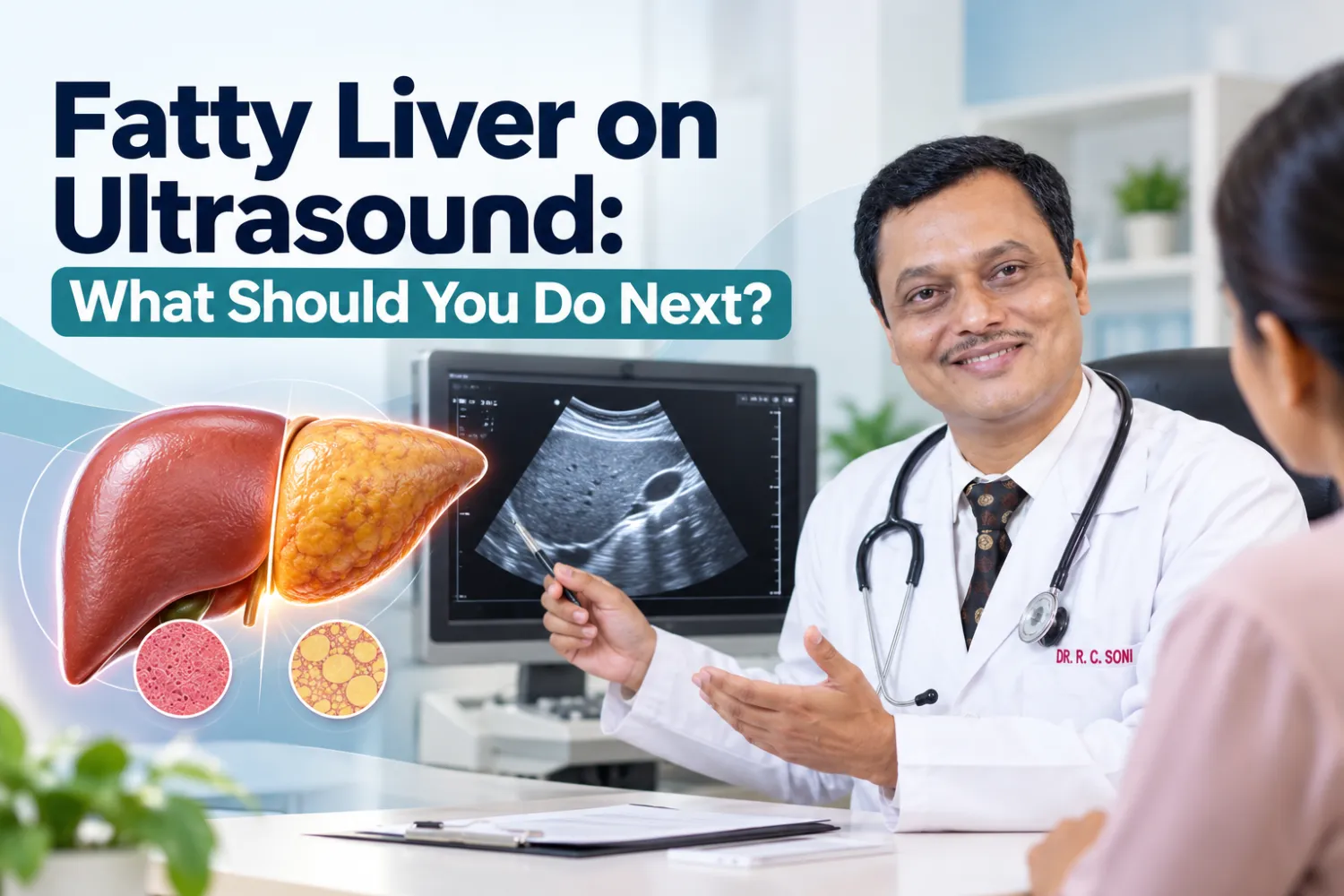
An ultrasound report that mentions “fatty liver,” “fatty infiltration,” or “increased liver echogenicity” can leave you wondering whether something serious is wrong. The finding is common, often discovered during a routine health check or an abdominal scan performed for another reason. However, it should not be ignored simply because you feel well.
The next step is not to panic or start taking liver supplements on your own. It is to understand what the report means, identify any underlying risk factors, and determine whether additional tests are needed to assess your liver health.
Dr. Ram Chandra Soni, Chairman – Gastroenterology & Hepatology at Accord Superspeciality Hospital, Faridabad, provides evaluation and care for liver and digestive conditions. This guide explains what to do after a fatty liver finding on ultrasound and how to discuss the right next steps with your doctor.
What Does Fatty Liver on Ultrasound Mean?
Fatty liver means excess fat has accumulated in the liver. Ultrasound may identify this by showing increased brightness or echogenicity of the liver tissue compared with the expected appearance.
Fat accumulation can be associated with several factors, including:
-
Excess body weight, particularly abdominal fat
-
Type 2 diabetes or insulin resistance
-
High triglycerides or abnormal cholesterol levels
-
High blood pressure and other metabolic risk factors
-
Alcohol consumption
-
Certain medications or other medical conditions
Fatty liver associated with metabolic risk factors is now commonly discussed under the term metabolic dysfunction-associated steatotic liver disease (MASLD). Alcohol-related liver disease and other causes also need to be considered where relevant.
An ultrasound finding alone does not establish the exact cause or tell you whether inflammation or scarring is present. For a broader explanation of the condition, read our guide to fatty liver disease, its symptoms, causes, stages and treatment options.
Step 1: Do Not Panic, but Do Not Ignore the Report
Fatty liver does not automatically mean you have severe liver disease. Many people have fat accumulation without advanced damage, and appropriate lifestyle changes can improve liver health.
However, some people develop inflammation and fibrosis, which is the formation of scar tissue. Advanced fibrosis can eventually progress to cirrhosis. The challenge is that early liver disease may cause few or no noticeable symptoms.
This is why the ultrasound result needs to be considered alongside your medical history, blood test results, metabolic health and, when indicated, further assessment of liver scarring.
Remember: the word “mild” in an ultrasound report does not independently rule out fibrosis, just as a more prominent ultrasound finding does not by itself confirm advanced disease.
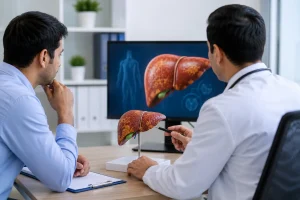
Step 2: Review Your Report With a Doctor
Your doctor will consider the complete ultrasound report rather than looking at the phrase “fatty liver” in isolation.
The report may mention mild, moderate or severe fatty changes. These descriptions can help indicate the appearance of fat accumulation, but conventional ultrasound cannot reliably determine the degree of inflammation or measure fibrosis.
Your doctor may also review:
-
Liver size and the appearance of the liver tissue
-
Whether the gallbladder or bile ducts show other abnormalities
-
Your alcohol intake, medication use and medical history
-
Your weight, waist circumference and blood pressure
-
Your history of diabetes, cholesterol problems or other metabolic conditions
If the ultrasound was performed for abdominal pain or another symptom, the doctor will also assess whether that symptom may have a cause unrelated to fatty liver.
If you have persistent symptoms or an abnormal liver report and need specialist assessment, you can learn more about
Step 3: Ask Whether Blood Tests Are Needed
After fatty liver is identified, a doctor may recommend blood tests based on your history, examination and existing results. These tests help assess liver health and identify conditions that may contribute to fat accumulation.
Common tests may include:
Liver function tests: These commonly measure enzymes such as ALT and AST, along with other markers that help assess liver and biliary health. Abnormal results may indicate a need for further evaluation.
Complete blood count: The platelet count can contribute to fibrosis risk assessment when interpreted with other clinical information.
Blood glucose or HbA1c: These help identify diabetes or elevated blood sugar, which can be associated with metabolic fatty liver disease.
Lipid profile: This measures cholesterol and triglycerides, helping identify cardiovascular and metabolic risk factors.
Additional tests when appropriate: Depending on your history and test results, a doctor may consider tests for viral hepatitis or other liver conditions.
One important point: normal liver enzyme levels do not always exclude significant liver fibrosis. Blood tests must be interpreted in context rather than treated as a complete measure of liver health.
Step 4: Find Out Whether You Need a Fibrosis Assessment
One of the most important questions after a fatty liver ultrasound is whether there is evidence of liver scarring.
Doctors may use a combination of clinical findings, blood test results and non-invasive tests to estimate the risk of fibrosis.
What is the FIB-4 score?
FIB-4 is a calculation that uses age, AST, ALT and platelet count to help estimate the likelihood of advanced liver fibrosis. It is a risk-assessment tool, not a definitive diagnosis.
The result is interpreted using appropriate clinical thresholds and in the context of factors such as age, other medical conditions and the reason for testing. A doctor may recommend further evaluation if the score or overall clinical picture raises concern.
What is FibroScan?
FibroScan is a non-invasive test that measures liver stiffness, which can help assess fibrosis risk. Depending on the equipment and clinical setting, it may also provide information about liver fat.
Not everyone with fatty liver on ultrasound needs FibroScan immediately. The decision depends on risk factors, blood tests, previous findings and the clinician’s assessment.
A liver biopsy is not routinely necessary for every patient with fatty liver. It may be considered in selected cases when other tests do not provide a clear answer or when a more specific diagnosis is needed.
For a more detailed discussion of liver evaluation, see Dr. Soni’s article on choosing a gastroenterologist in Faridabad.
Step 5: Start Making Practical Lifestyle Changes
Lifestyle management is a central part of fatty liver care, particularly when excess weight, diabetes, insulin resistance or abnormal blood lipids are contributing factors.
The right plan should be realistic enough to maintain over time. Extreme diets, prolonged fasting without medical advice and “detox” programmes are not necessary for most people.
1. Aim for a healthy, sustainable weight
If you are overweight, gradual weight loss may reduce liver fat and improve metabolic health. Research suggests that losing around 3–5% of body weight can reduce liver fat, while greater weight loss may be needed to improve inflammation or fibrosis in some people.
The appropriate target varies by individual. If your weight is already within a healthy range, avoid pursuing unnecessary weight loss; your doctor can help identify other relevant risk factors.
2. Review what you eat and drink
A balanced eating pattern can include:
-
Vegetables and whole fruits
-
Whole grains and high-fibre foods
-
Pulses, beans and other suitable protein sources
-
Fish, eggs or lean protein according to your dietary preferences
-
Nuts and unsaturated fats in appropriate portions
Try to reduce sugary drinks, frequent sweets, heavily processed snacks and excessive portions of refined carbohydrates or fried foods. You do not need a special “liver cleanse” to manage fatty liver.
3. Build regular physical activity into your routine
Walking, cycling, swimming, resistance training or other suitable activities can help improve metabolic health. Start at a level you can manage and increase gradually.
People who cannot exercise vigorously may still benefit from regular movement. If you have a significant medical condition, joint problems or other physical limitations, ask your clinician how to exercise safely.
4. Review alcohol and medication use
Alcohol may worsen liver injury, depending on the cause and severity of the disease. Discuss whether you should avoid it completely, particularly if there is evidence of liver inflammation or fibrosis.
Also tell your doctor about prescription medicines, over-the-counter products, herbal remedies and supplements. Do not stop prescribed medication without medical advice, and do not assume that a product marketed as “natural” is safe for the liver.
Step 6: Treat the Conditions Associated With Fatty Liver
Managing fatty liver often involves more than focusing on the liver itself.
If you have diabetes, high cholesterol, high triglycerides, high blood pressure or excess weight, your doctor may recommend a coordinated plan to address these conditions. Doing so can improve overall metabolic health and may reduce long-term liver and cardiovascular risks.
There is no single medicine that is appropriate for everyone with fatty liver. Medication decisions depend on the underlying cause, the presence of other conditions, the degree of liver damage and current treatment guidance.
Do not start medication, high-dose vitamins or herbal supplements simply because your ultrasound report mentions fatty liver. Your clinician can determine whether any specific treatment is appropriate.
Step 7: Know When to Seek Medical Attention
Many people with fatty liver feel completely well. Nevertheless, certain symptoms require prompt medical assessment because they may indicate a significant liver problem or another serious condition.
Seek urgent medical care if you develop:
-
Yellowing of the skin or eyes
-
Vomiting blood or passing black, tarry stools
-
New confusion or unusual drowsiness
-
Rapid abdominal swelling
-
Severe or rapidly worsening abdominal pain
Persistent fatigue or discomfort in the upper right side of the abdomen is not specific to fatty liver, but it deserves assessment if it continues or worsens.
Do not wait for symptoms before arranging appropriate follow-up if you have known liver disease, diabetes, multiple metabolic risk factors or concerning test results.
How Often Should You Repeat Tests?
There is no universal schedule for repeating ultrasound scans or blood tests after a fatty liver diagnosis.
Your follow-up plan depends on your age, metabolic risk factors, liver enzyme results, fibrosis assessment and any other medical conditions. Some people may need periodic blood tests and lifestyle reviews; others may require additional investigations or closer specialist monitoring.
Repeating an ultrasound alone may not answer the most important question: whether liver scarring is developing. Your doctor can decide which tests are useful and when to perform them.
Keep copies of previous reports and blood tests so that changes can be compared over time.
Why Consult a Gastroenterologist for Fatty Liver?
A gastroenterologist with expertise in liver disease can help clarify the cause of fatty liver, assess the risk of fibrosis and plan appropriate monitoring.
During an evaluation, the doctor may review your ultrasound, blood tests, metabolic health, medication history and alcohol intake. Further testing is recommended only when it is clinically appropriate.
If you are looking for liver care in Faridabad, you can learn more about
. He is Chairman – Gastroenterology & Hepatology at Accord Superspeciality Hospital, Faridabad.
The aim is not simply to label the ultrasound result, but to understand what it means for your health and create a practical plan for treatment and follow-up.
Frequently Asked Questions
1. Is fatty liver on ultrasound serious?
Not necessarily. Fatty liver is common and may improve with appropriate lifestyle changes. However, some people develop inflammation and fibrosis, so the finding should be assessed alongside medical history, blood tests and other risk factors.
2. Can fatty liver be reversed?
Liver fat can often decrease with sustainable lifestyle changes, improved metabolic health and, where appropriate, weight loss. The outcome depends on the cause and stage of disease. Advanced scarring requires specialist assessment and may not fully reverse.
3. Can I have fatty liver if my liver function tests are normal?
Yes. Normal liver enzyme results do not reliably exclude fatty liver-related inflammation or advanced fibrosis. Your doctor may recommend additional risk assessment depending on your medical history and other findings.
4. Do I need a FibroScan after an ultrasound shows fatty liver?
Not everyone does. FibroScan may be recommended when blood-based risk assessment, medical history or other findings suggest a need to evaluate liver stiffness more closely.
5. Which foods should I avoid with fatty liver?
There is no single list that suits everyone. In general, limit sugary drinks, excess added sugar, highly processed foods and excessive portions of refined carbohydrates or fried foods. A balanced eating pattern tailored to your needs is more useful than a restrictive “detox” diet.
6. Should I take supplements to clean my liver?
Do not start liver-cleansing supplements without medical advice. Some supplements may cause liver injury or interact with medicines. Ask your doctor before taking herbal or high-dose vitamin products.
7. When should I see a gastroenterologist?
Consider an appointment if your ultrasound shows fatty liver, your liver blood tests are abnormal, you have diabetes or multiple metabolic risk factors, or you are unsure whether further testing is needed. Seek urgent care for warning signs such as jaundice, vomiting blood, black stools or new confusion.
Take the Next Step for Your Liver Health
A fatty liver finding on ultrasound is a reason to understand your liver health—not a reason to panic or self-medicate. The right next step may involve blood tests, assessment of fibrosis risk, lifestyle changes or further evaluation based on your individual circumstances.
If your report shows fatty liver and you are unsure what to do next, consult a qualified clinician for personalised advice.
For liver and digestive health consultation in Faridabad, visit Dr. Ram Chandra Soni’s official website
Medical disclaimer: This article is for general educational purposes and does not replace a consultation, diagnosis or treatment plan from a qualified healthcare professional.

 WhatsApp Us