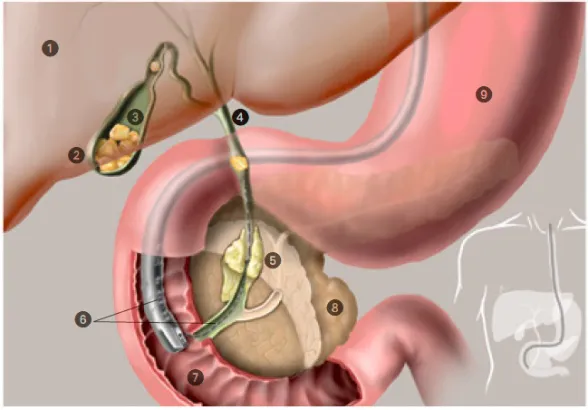
ERCP (Endoscopic Retrograde Cholangiopancreatography) is a specialised endoscopic procedure used to treat selected conditions affecting the bile ducts and pancreatic ducts. It can help remove bile duct stones, relieve certain blockages, widen selected narrowings, place stents and collect tissue or cell samples when required.
If you have been diagnosed with a bile duct stone, obstructive jaundice, a suspected bile duct stricture or a pancreatic duct problem, your gastroenterologist may recommend ERCP after reviewing your symptoms, blood tests and imaging results.
Dr. Ram Chandra Soni, Chairman – Gastroenterology & Hepatology at Accord Superspeciality Hospital, Faridabad, provides evaluation and management for digestive, liver, biliary and pancreatic conditions, including those that may require advanced endoscopic treatment.
The decision to perform ERCP depends on the underlying condition and whether an endoscopic intervention is likely to help. It is not routinely required for every person with gallstones, abdominal pain or abnormal liver tests.
Endoscopic Retrograde Cholangiopancreatography, commonly called ERCP, combines upper gastrointestinal endoscopy with X-ray imaging to examine and treat selected problems in the bile ducts and pancreatic ducts.
The bile ducts carry bile from the liver and gallbladder towards the small intestine. The pancreatic duct carries digestive secretions from the pancreas into the intestine. Stones, narrowing, inflammation or growths can sometimes obstruct these ducts and interfere with the normal flow of bile or pancreatic fluid.
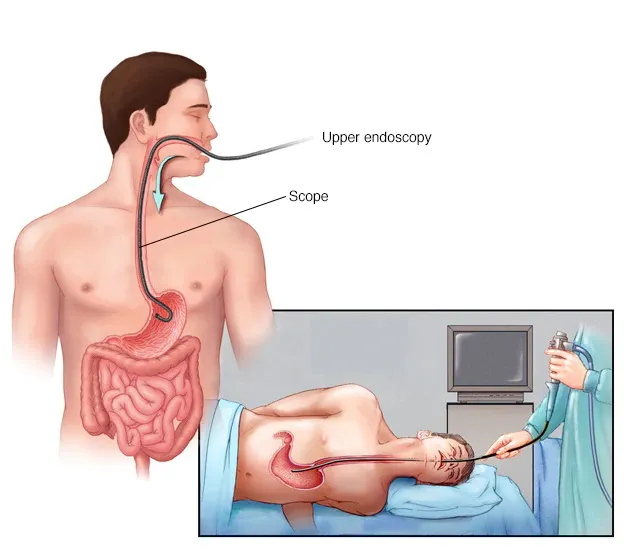
During ERCP, a specialist passes a flexible endoscope through the mouth into the first part of the small intestine. A small opening where the bile and pancreatic ducts drain into the intestine is identified. Contrast dye may then be introduced into the relevant duct, and X-ray images help guide treatment.
Unlike a procedure used only to examine the digestive tract, ERCP can often address the problem during the same session.
Depending on the findings, the specialist may remove a stone, place a temporary or longer-term stent, widen a narrowing or collect samples for further testing.
ERCP is generally considered when investigations suggest a specific bile duct or pancreatic duct problem that may benefit from endoscopic treatment.
Gallstones sometimes move out of the gallbladder and become lodged in the common bile duct. These stones can obstruct the flow of bile and may cause jaundice, upper abdominal pain, abnormal liver function tests or infection of the bile ducts.
ERCP can allow the specialist to remove suitable bile duct stones using specialised instruments. Larger or difficult stones may require additional techniques.
Having gallstones in the gallbladder does not automatically mean you need ERCP. If a stone remains confined to the gallbladder, other treatment options may be more appropriate.
A blockage in the bile ducts can prevent bile from draining normally. Possible causes include stones, inflammation, scarring or a growth involving the bile duct, pancreas or nearby structures.
ERCP may help identify the site of an obstruction and restore drainage by removing the blockage or inserting a stent, depending on its cause.
Symptoms that warrant medical assessment include yellowing of the eyes or skin, dark urine, pale stools and itching. Fever or chills with jaundice and abdominal pain can indicate a serious infection and require urgent medical attention.
A bile duct stricture is an abnormal narrowing of the duct. It may develop because of inflammation, previous surgery, injury, scarring or a tumour.
In selected cases, ERCP allows the specialist to assess the narrowing, collect brushings or tissue samples and insert a stent to improve bile flow. Balloon dilation may also be considered when appropriate.
The treatment plan depends on the location, cause and severity of the narrowing.
ERCP may be useful for certain pancreatic duct problems, including selected duct stones, obstructing strictures and complications associated with chronic pancreatitis.
Treatment may involve removing suitable stones, widening a narrowing or placing a pancreatic duct stent. These procedures require careful assessment because pancreatic duct interventions carry specific risks.
ERCP is not routinely recommended for every episode of acute pancreatitis. The cause of pancreatitis, evidence of persistent obstruction, signs of infection and the patient’s overall condition determine whether urgent or planned intervention is appropriate.
When a growth obstructs the bile duct, ERCP may help restore drainage through stent placement. The specialist may also collect brushings or other samples to support diagnosis.
ERCP findings alone do not always establish whether a growth is cancerous. Additional imaging, endoscopic ultrasound or laboratory examination of tissue may be necessary.
Several procedures can help doctors evaluate the bile ducts, pancreas and digestive tract. They have different purposes, and one test does not automatically replace another.
| Procedure | What it does | When it may be useful |
|---|---|---|
| ERCP | Combines endoscopy and X-ray imaging; can also treat duct problems | Removing bile duct stones, relieving obstruction, placing stents and obtaining selected samples |
| MRCP | Uses MRI to create images of the bile and pancreatic ducts without an endoscope entering the ducts | Non-invasive assessment of suspected duct stones, narrowing and other structural abnormalities |
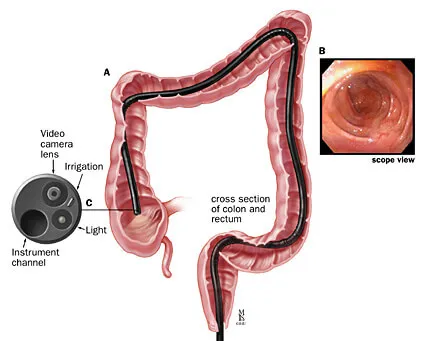
| Conventional upper GI endoscopy | Examines the lining of the food pipe, stomach and upper small intestine | Evaluating ulcers, inflammation, bleeding and other upper digestive tract conditions |
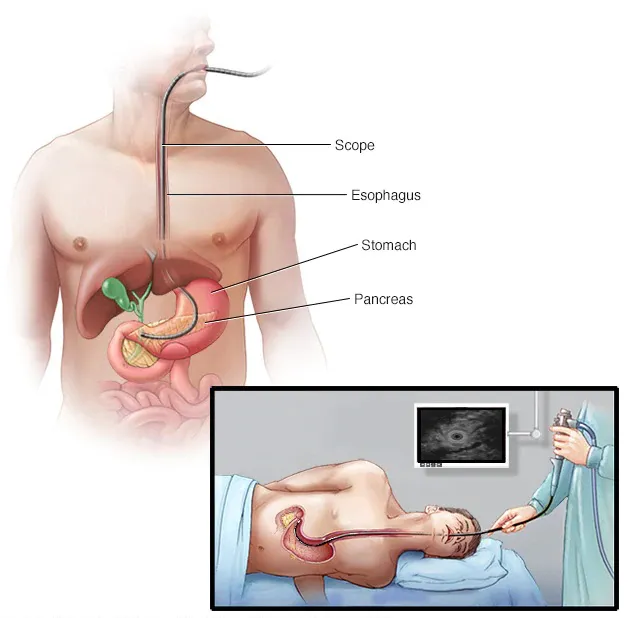
| Endoscopic ultrasound (EUS) | Combines an endoscope with ultrasound imaging to examine structures near the digestive tract | Assessing the pancreas, bile ducts and nearby lesions; obtaining tissue samples when indicated |
The most suitable test depends on what your doctor needs to establish.
MRCP is often preferred when detailed duct imaging is required without an invasive procedure. It cannot remove a stone or place a stent.
EUS can provide detailed images of small stones, the pancreas and nearby structures. It can also help obtain tissue samples from selected lesions.
ERCP is particularly valuable when a blockage or other duct problem needs treatment. Because it carries risks, it is generally reserved for situations in which an intervention is expected to be beneficial rather than used simply to obtain diagnostic images.
Conventional endoscopy examines the digestive tract lining but does not provide the same direct access to the bile and pancreatic ducts as ERCP.
Your medical team will provide instructions based on your health, planned procedure and sedation requirements. Preparation commonly includes the following steps.
You will usually be asked not to eat or drink for a specified period before ERCP. Follow the exact fasting instructions provided by the hospital, including instructions about water and essential medicines.
Do not assume that the same fasting schedule applies to every patient.
Tell your doctor about all prescription medicines, over-the-counter products, vitamins and supplements you take.
This is particularly important if you use:
Do not stop or change any medicine on your own. Your doctor will advise you whether adjustments are necessary.
Inform your medical team about allergies, previous reactions to sedation or anaesthesia, existing heart or lung conditions, kidney problems, pregnancy or the possibility of pregnancy, and any previous pancreatitis.
Tell the specialist if you have had earlier ERCP procedures, biliary stents or surgery involving the gallbladder, bile ducts or pancreas.
Sedation can affect judgement, coordination and alertness for several hours. Arrange for a responsible adult to accompany you home if you are having an outpatient procedure. Follow the hospital’s advice about driving, operating machinery and returning to work.
The exact steps depend on the reason for ERCP and what the specialist finds during the examination.
The team reviews your medical history, symptoms, blood tests and imaging. The specialist explains the proposed intervention, expected benefits, alternatives and possible complications before obtaining informed consent.
ERCP is performed with sedation or anaesthesia appropriate to the patient and procedure. Your breathing, oxygen levels, heart rate and blood pressure are monitored throughout.
A flexible endoscope is gently passed through the mouth into the stomach and the first part of the small intestine. The specialist locates the opening of the bile and pancreatic ducts.
A catheter is guided into the relevant duct, and contrast dye is introduced when needed. X-ray images help the specialist assess the duct and guide the next steps.
Depending on the findings, the specialist may:
Not every patient needs all these steps. Treatment is tailored to the problem identified and the patient’s clinical condition.
After the procedure, you are monitored while the effects of sedation wear off. The team explains the findings, any treatment performed and the next steps, including whether further observation or hospital admission is needed.
When a stone is lodged in the common bile duct and removal is appropriate, the specialist uses endoscopic instruments to access the duct.
A small opening may be enlarged through sphincterotomy, or the opening may be dilated using a suitable technique. A retrieval balloon or basket can then help remove the stone into the intestine.
Some stones are large, impacted or difficult to remove. Depending on the situation, additional methods such as mechanical lithotripsy or cholangioscopy-guided treatment may be considered.
If stones are removed from the bile duct, the gallbladder may still contain stones. A separate treatment plan, which may include gallbladder surgery, should be discussed when appropriate.
A biliary stent is a small tube inserted into the bile duct to help bile drain into the intestine. A pancreatic duct stent may be used in selected pancreatic duct conditions or for specific procedural reasons.
Stents may be considered when:
Some stents are temporary and must be removed or exchanged at a planned time. Others may be used for longer periods, depending on the underlying condition and treatment goals.
Do not miss a scheduled stent-removal or exchange appointment. Your doctor should clearly explain what type of stent has been placed and when follow-up is required.
Recovery depends on the complexity of the procedure, the treatment performed and your overall health.
After sedation, you may experience temporary drowsiness, a sore throat, mild bloating or discomfort. These symptoms generally improve, but your medical team should assess symptoms that are severe, persistent or worsening.
Many patients can return home on the same day, although some need overnight observation or a longer hospital stay.
Your doctor will advise you when to resume eating, drinking and your regular medicines. Follow any specific dietary instructions, particularly if treatment was performed for pancreatitis, infection or a significant obstruction.
Contact your medical team urgently or seek emergency care if you develop:
These symptoms may indicate a complication and should not be ignored.
ERCP can be highly useful when treatment is needed, but it is an invasive procedure and is not risk-free. Your individual risk depends on the reason for the procedure, your medical history and the treatment performed.
Inflammation of the pancreas after ERCP is one of its most important complications. It can cause new or worsening abdominal pain, nausea and vomiting and may require hospital treatment.
The team assesses risk before the procedure and may use preventive measures, such as appropriate medicines or pancreatic duct stenting in selected cases.
Bleeding can occur, particularly after sphincterotomy. The risk may be affected by blood-thinning medicines, clotting problems and other medical conditions.
Infection of the bile ducts, known as cholangitis, can occur, particularly if drainage is incomplete or an obstruction remains. Antibiotics and adequate drainage may be needed in selected situations.
A perforation is an injury or hole in the wall of the digestive tract or ductal area. It is uncommon but can be serious and may require additional treatment or surgery.
Sedation or anaesthesia can affect breathing, blood pressure or heart function, especially in patients with certain underlying conditions. Appropriate monitoring helps the team identify problems promptly.
Before consenting to ERCP, ask your specialist about the expected benefit, individual risks, alternatives and what would happen if the procedure were deferred.
Gallstones are common, but their location and whether they are causing complications matter.
A stone confined to the gallbladder may require a different approach from a stone obstructing the common bile duct. Similarly, abdominal pain can arise from many digestive and non-digestive conditions.
Your doctor may recommend blood tests, abdominal ultrasound, MRCP, EUS or another investigation before deciding whether ERCP is appropriate.
For example, if imaging suggests a common bile duct stone that needs removal, ERCP may be the next step. If the diagnosis is uncertain and there is no immediate need for intervention, a non-invasive imaging test may be safer and more suitable.
This careful selection helps ensure that the benefits of ERCP justify its risks.
Choosing a specialist for ERCP involves more than finding someone who performs the procedure. It is important to have an accurate assessment, a clear explanation of treatment options and an appropriate follow-up plan.
Dr. Ram Chandra Soni holds MBBS, MD (Medicine) and DM (Gastroenterology) qualifications and serves as Chairman – Gastroenterology & Hepatology at Accord Superspeciality Hospital, Faridabad.
Dr. Soni’s professional profile describes experience in therapeutic endoscopy, including ERCP, as well as endoscopic ultrasound and other advanced digestive procedures. Experience is important when assessing complex bile duct and pancreatic duct conditions.
A careful assessment helps determine whether a suspected stone, stricture or obstruction is likely to benefit from ERCP or whether another investigation or treatment is more appropriate.
The approach to a small bile duct stone may differ from the approach to a complex narrowing, difficult stone or pancreatic duct problem. Treatment should reflect the diagnosis, the patient’s medical history and the expected benefits and risks.
Safe care includes pre-procedure assessment, appropriate monitoring, instructions for recovery and a clear plan for any stent removal, exchange or additional treatment that may be required.
Dr. Soni consults at Accord Superspeciality Hospital and his Gastro Clinic in Sector 17, Faridabad. Patients can discuss their reports and symptoms to understand the most suitable next step.
If you have been advised to undergo ERCP, bring your previous imaging, blood test reports, medication list and details of any earlier procedures to your consultation.
If you have been diagnosed with a bile duct stone, suspected biliary obstruction, a bile duct stricture or a selected pancreatic duct condition, consult a gastroenterologist to understand whether ERCP is appropriate for you.
Appointment: +91 98114 46141 | 24×7 Emergency: +91 88005 01960
Hospital: Accord Superspeciality Hospital, Sector 86, Greater Faridabad
Clinic: SCO 91, Sector 17, near Indian Bank, HUDA Market, Faridabad
Visit the official website for appointment information and consultation details.
ERCP is mainly used to treat selected problems involving the bile ducts and pancreatic ducts. Common reasons include removing bile duct stones, relieving an obstruction, treating selected strictures, placing stents and collecting samples from suspicious ductal lesions.
ERCP is an endoscopic procedure rather than conventional open surgery. The specialist accesses the ducts through the mouth using a flexible endoscope and specialised instruments. Although it is minimally invasive, it carries important risks and requires appropriate monitoring.
ERCP is generally performed with sedation or anaesthesia to improve comfort. You may experience temporary throat discomfort, bloating or abdominal discomfort afterwards. Significant or worsening abdominal pain should be assessed promptly.
The duration varies according to the complexity of the problem and the treatment required. A straightforward procedure may be relatively brief, while difficult stone removal, complex strictures or additional interventions may take longer. Your team can give you an estimate based on your case.
No. ERCP is generally considered when a stone or another problem affects the bile duct and treatment through ERCP is appropriate. Gallstones confined to the gallbladder usually require a different assessment and may need observation or gallbladder surgery, depending on symptoms and complications.
MRCP uses MRI to create images of the bile and pancreatic ducts without entering them with an endoscope. ERCP combines endoscopy with X-ray imaging and allows treatment, such as stone removal or stent placement. MRCP is often used for diagnosis when an intervention is not immediately required.
Important risks include post-ERCP pancreatitis, bleeding, infection, perforation and complications related to sedation. The likelihood varies with the patient and the procedure. Your specialist should explain the risks and preventive measures relevant to your situation.
Some patients go home the same day after observation, while others require admission depending on the procedure, their health and any complications. You should follow your discharge instructions and arrange transport if sedation has been used. Severe abdominal pain, fever, vomiting or bleeding after ERCP requires urgent medical assessment.
for ERCP
From endoscopy and colonoscopy to FibroScan, ERCP and advanced gastrointestinal procedures, we offer expert diagnosis and personalized treatment for a wide range of digestive disorders.
Experience personalized medical attention and compassionate care. Book your appointment today and take the first step toward better health.
© 2026. Dr. Rama Chandra Soni.All rights Reserved.
Built By: Shivafeb17 | Codenbrand
 WhatsApp Us