

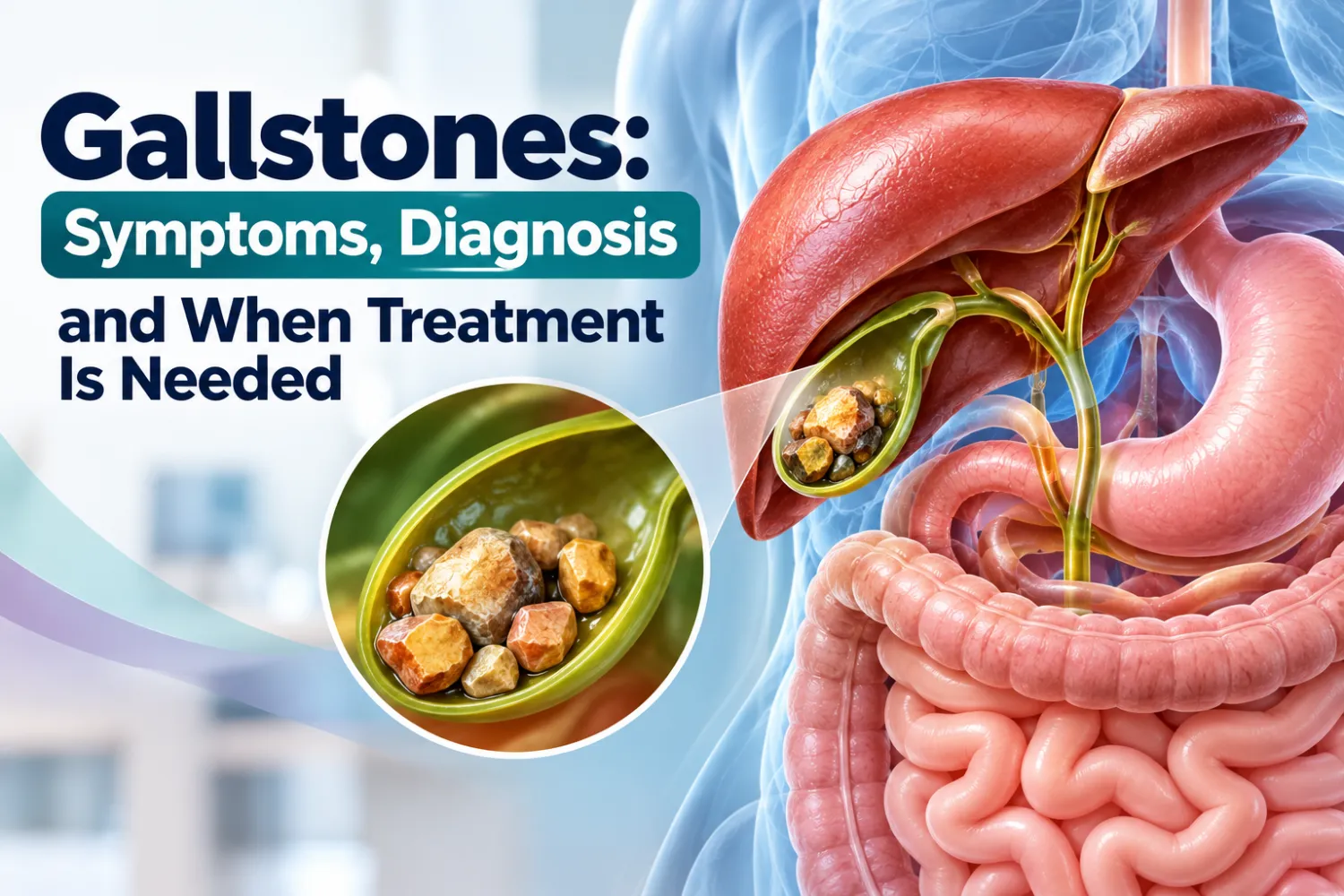
Gallstones are hard deposits that form in the gallbladder. Many people have them without ever knowing, and stones that cause no symptoms usually do not need treatment. Treatment becomes important when stones cause repeated attacks of pain or complications such as infection, jaundice or pancreatitis.
This guide explains the typical symptoms, how gallstones are confirmed, who needs treatment, and which warning signs should not be ignored.
What are gallstones?
The gallbladder is a small pouch under the liver. It stores bile, a digestive fluid made by the liver that helps break down fat. When bile contains too much cholesterol or pigment (bilirubin), it can form crystals that grow into stones. They range from the size of a grain of sand to a golf ball.
- Cholesterol stones are the most common type.
- Pigment stones are linked to conditions that increase red blood cell breakdown, such as some blood disorders, and to cirrhosis.
Stones can stay in the gallblaGallstones are hard deposits that form in the gallbladder. Many people have them without ever knowing, and stones that cause no symptoms usually do not need treatment. Treatment becomes important when stones cause repeated attacks of pain or complications such as infection, jaundice or pancreatitis.
This guide explains the typical symptoms, how gallstones are confirmed, who needs treatment, and which warning signs should not be ignored.
dder or move into the bile duct, the tube that carries bile to the intestine. A stone in the bile duct is more likely to cause serious problems.
Who is more likely to get gallstones?
Common risk factors include:
- Female sex, pregnancy and the use of hormone treatments
- Age above 40
- Overweight or obesity
- Rapid weight loss, including some crash diets and weight-loss surgery
- Diabetes and metabolic syndrome
- A family history of gallstones
- Long periods of fasting, and low physical activity
- Certain medicines, and conditions such as cirrhosis or Crohn’s disease
Having risk factors does not mean you will develop stones, and many people with stones have none of these risks.
Gallstone symptoms
Most people with gallstones have no symptoms. Stones found on a scan done for another reason are called incidental or silent gallstones.
When symptoms occur, the typical pattern is called biliary colic:
- Sudden, steady pain in the upper right or upper middle abdomen
- Pain that builds over several minutes, lasts from about half an hour to a few hours, then eases
- Pain that may spread to the right shoulder blade or back
- Nausea or vomiting
- Attacks that often follow a heavy or fatty meal, or that wake you at night
Bloating, belching, gas or discomfort after meals are very common and have many other causes, including acid reflux, gastritis and irritable bowel syndrome. They are not reliable signs of gallstones on their own, which is one reason the diagnosis is confirmed with a scan.
Warning signs that need urgent care
Go to a hospital emergency department if gallstone-type pain comes with any of these:
- Pain lasting more than about six hours or getting worse
- Fever or chills
- Yellow eyes or skin (jaundice), dark urine or pale stools
- Severe pain that spreads to the back, with repeated vomiting
- Confusion, a fast heartbeat or feeling faint
These can indicate gallbladder inflammation (cholecystitis), a stone blocking the bile duct, infection of the bile ducts (cholangitis) or gallstone pancreatitis. They need prompt treatment.
How gallstones are diagnosed
- Ultrasound of the abdomen. This is the first test. It is painless, widely available and good at showing stones in the gallbladder. It is less reliable for stones in the bile duct.
- Blood tests. Liver function tests (bilirubin, ALP, GGT, ALT and AST), a complete blood count and sometimes amylase or lipase help detect infection, bile duct blockage or pancreatitis.
- MRCP (MRI of the bile ducts). It shows the bile ducts in detail without a scope and helps look for duct stones.
- Endoscopic ultrasound (EUS). A scope with an ultrasound probe can detect very small stones or sludge and small duct stones that other scans miss.
- CT scan. Used mainly when complications or other causes of pain are suspected.
- ERCP. This is mostly a treatment, used to remove stones from the bile duct, rather than a first diagnostic test.
Your doctor will choose tests according to your symptoms and blood results. Not everyone needs all of them.
When is treatment needed?
Stones with no symptoms
For most people with silent gallstones, the usual advice is to monitor and treat only if symptoms appear, because the chance of problems in any given year is low. [1] Surgery is sometimes discussed even without symptoms in specific situations. Examples include a calcified (“porcelain”) gallbladder, very large stones, gallbladder polyps above a certain size, and some blood disorders or planned weight-loss surgery. Gallbladder cancer is uncommon overall but is more frequent in parts of northern India, so doctors here may take long-standing or large stones more seriously. This is a decision to make with your doctor, not a reason to be alarmed.
Stones that cause symptoms
Once stones have caused biliary colic, attacks usually recur, and the risk of complications rises. For this reason, removing the gallbladder is generally recommended for people with symptomatic stones who are fit for surgery.
Treatment options
Laparoscopic cholecystectomy (gallbladder removal)
This is the standard treatment for symptomatic gallstones. A surgeon removes the gallbladder through small keyhole incisions. It removes the organ where stones form, so stones do not return to it. Most people live normally without a gallbladder, as bile continues to flow from the liver to the intestine. Some develop looser stools for a while after surgery, and this usually settles.
Medicines to dissolve stones
A medicine called ursodeoxycholic acid can dissolve small cholesterol stones in carefully selected people. It works slowly, over many months, and stones can return after it is stopped, so it is not the usual first choice. It may be considered for people who cannot or do not want to have surgery. It does not work on all types of stones, so it should only be used under medical supervision.
Treatment of bile duct stones
When a stone is in the bile duct, the usual treatment is ERCP, an endoscopic procedure in which the stone is removed through the mouth without an incision. The gallbladder is often removed afterwards to prevent more stones. This is where a gastroenterologist’s skills are directly involved.
Treatment of complications
Acute cholecystitis, cholangitis and gallstone pancreatitis are treated in hospital, usually with fluids, pain relief and antibiotics where needed, and with drainage of an infected duct or early gallbladder surgery depending on the situation.
What about diet?
Diet cannot dissolve gallstones. Some people notice that large, fatty meals bring on pain and choose to eat lighter food, which is reasonable. Avoid crash diets and very rapid weight loss, which increase the risk of stones. Gradual weight loss, regular meals and physical activity are safer approaches.
Who treats gallstones? Gastroenterologist or surgeon?
Gallstone care often involves both. The roles are different:
- A gastroenterologist assesses the symptoms, orders and interprets tests, looks for other causes of upper abdominal pain (such as ulcers, reflux, fatty liver or pancreatic disease), and treats bile duct stones with ERCP.
- A general or laparoscopic surgeon removes the gallbladder.
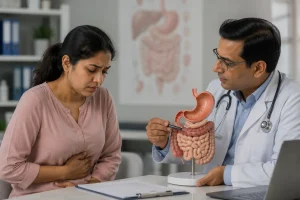
If you have been told you have stones but are not sure whether surgery is needed, a gastroenterology consultation can help clarify whether your symptoms are really from gallstones and what the next step should be.
Gallstone assessment in Faridabad
If you are looking for a specialist opinion in Faridabad on gallstones, Dr. Ram Chandra Soni is a gastroenterologist and hepatologist (MBBS, MD, DM in Gastroenterology) and Chairman of Gastroenterology & Hepatology at Accord Superspeciality Hospital, Faridabad, according to his profile. The profile lists ERCP and endoscopic ultrasound among his procedures, along with other liver and digestive care described on the services page. Where gallbladder surgery is needed, it is carried out by a surgeon.
Bring your ultrasound and blood test reports, and note how often the pain occurs, how long it lasts and what seems to trigger it.
Conclusion
Gallstones are common and often harmless. Treatment depends on whether they cause symptoms or complications, not simply on whether they appear on a scan. If you have repeated upper abdominal pain, or a scan that shows stones, a specialist review can help you decide between monitoring and treatment. If you would like to discuss your reports, you can book a consultation.
This article is for general education and does not replace advice from your own doctor. It must be reviewed and approved by Dr. Soni or a qualified medical reviewer before publication.
Frequently asked questions
Do all gallstones need to be removed?
No. Stones that cause no symptoms are usually monitored, not removed. Treatment is generally recommended once stones cause attacks of pain or complications, or in certain higher-risk situations that your doctor will explain.
Can gallstones go away on their own?
Stones do not usually disappear by themselves. Small stones can pass into the bile duct and sometimes into the intestine, but this can cause pain or blockage on the way, so symptoms should be assessed.
Where is gallstone pain felt?
Typically in the upper right or middle part of the abdomen, sometimes spreading to the right shoulder blade or back. It is usually steady rather than cramping, and lasts from half an hour to several hours.
Can gallstones be treated without surgery?
Sometimes. A medicine called ursodeoxycholic acid can dissolve some small cholesterol stones, but it takes months and stones often return. Surgery is the usual definitive treatment for symptomatic stones.
Can I live normally without a gallbladder?
Yes. The liver continues to make bile, which flows directly into the intestine. Some people have looser stools or bloating for a while after surgery, which often settles. Your doctor will advise on diet after surgery.
Are gallstones linked to cancer?
Gallbladder cancer is uncommon, but long-standing gallstones and some gallbladder abnormalities are recognised risk factors. This is one reason doctors in some regions, including northern India, take larger stones and polyps seriously. Most people with gallstones never develop cancer.
What should I avoid eating if I have gallstones?
There is no diet that dissolves stones. If fatty or heavy meals trigger pain, eating smaller, lighter meals may help. Avoid crash diets and very rapid weight loss, which can make stones more likely.
 WhatsApp Us