Persistent bloating, excessive gas, abdominal discomfort and changes in bowel habits can have several causes, including carbohydrate malabsorption and small intestinal bacterial overgrowth (SIBO). Hydrogen breath testing is a non-invasive investigation that may help identify selected causes of these symptoms.
Dr. Ram Chandra Soni, MBBS, MD (Medicine), DM (Gastroenterology), is Chairman of Gastroenterology & Hepatology at Accord Superspeciality Hospital, Faridabad. His website lists hydrogen breath testing among the digestive diagnostic services offered.
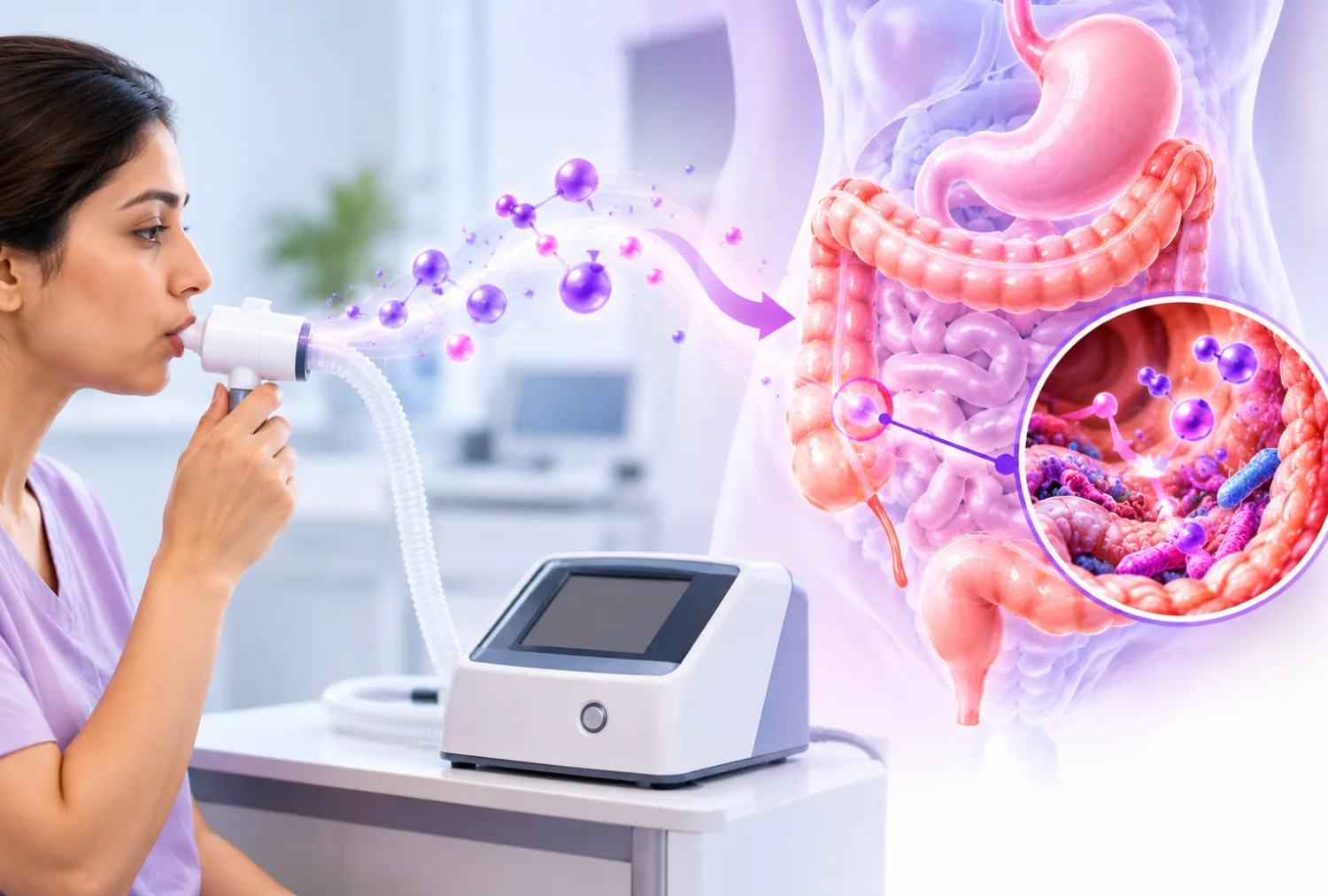
A hydrogen breath test measures changes in hydrogen gas in your exhaled breath after you consume a specific test solution, such as lactose, another carbohydrate or a solution used in a SIBO assessment.
Some intestinal bacteria produce hydrogen when they break down carbohydrates. This gas enters the bloodstream and is eventually breathed out through the lungs. Measuring changes over time can provide clues about how a particular substance is being processed in the digestive tract.
The test may help investigate certain digestive conditions, but it does not diagnose every cause of bloating, abdominal pain or altered bowel habits.
A gastroenterologist may recommend testing when symptoms and medical history suggest a condition that the test can help investigate.
Symptoms alone cannot confirm lactose intolerance or SIBO. The choice of test should be based on the suspected condition and the patient’s history.
Some breath-testing protocols measure hydrogen alone, while others measure both hydrogen and methane.
Hydrogen is produced by certain intestinal microbes during carbohydrate fermentation. Methane is produced by other microorganisms that use hydrogen. In some patients, measuring both gases may improve the assessment, particularly when SIBO or intestinal methanogen overgrowth is suspected.
Methane testing can be especially relevant in patients with constipation, although symptoms and test results must be interpreted together. A hydrogen-only test may not identify every case because some people produce relatively little measurable hydrogen.
The appropriate test depends on the clinical question and the testing protocol available.
Preparation is essential because recent food intake, medicines and other factors can influence the result. Follow the specific instructions provided by the testing centre.
Preparation may include:
Preparation requirements vary by test type. Inadequate preparation can make the result difficult to interpret.
The process is generally straightforward:
Multiple samples are necessary because gas levels can change as the test substance moves through the digestive tract. Depending on the substance and protocol, testing may take a few hours.
The test is non-invasive and usually does not require sedation.
The clinician reviews the pattern of gas measurements, timing, symptoms and preparation quality. The meaning of the result depends on whether the test was designed to assess carbohydrate malabsorption or suspected SIBO.
False-positive results can occur, for example, when rapid intestinal transit allows a test substance to reach bacteria in the colon earlier than expected. False-negative results may occur when a person produces little measurable hydrogen, preparation is inadequate or the test does not capture the relevant pattern.
For SIBO testing, breath-test accuracy has limitations, so results should not be interpreted in isolation. A positive test does not automatically explain every symptom, and a negative result does not exclude every digestive disorder.
Although both tests measure breath gases, they answer different questions.
The test substance, sampling schedule, interpretation criteria and limitations differ. The two tests should not be treated as interchangeable.
Dr. Ram Chandra Soni is a gastroenterologist with MBBS, MD (Medicine) and DM (Gastroenterology) qualifications. He serves as Chairman of Gastroenterology & Hepatology at Accord Superspeciality Hospital, Faridabad.
His practice includes evaluation of digestive complaints such as bloating, abdominal discomfort and altered bowel habits. A specialist consultation can help determine whether hydrogen or methane breath testing is appropriate, interpret results in the context of symptoms and plan further evaluation when necessary.
No. It involves breathing into a collection device, drinking a prescribed test solution and providing repeated breath samples. Some people may experience temporary bloating or discomfort after the solution.
It depends on the test substance and protocol. Many tests take a few hours because several breath samples must be collected over time.
It can help identify lactose malabsorption. The clinician considers the test result alongside symptoms to determine whether lactose is likely to be causing the problem.
Yes, selected protocols use breath testing to investigate suspected SIBO. However, the test has limitations, and results must be interpreted alongside clinical findings.
Some intestinal microorganisms use hydrogen to produce methane. Measuring both gases may provide additional information, particularly when constipation or intestinal methanogen overgrowth is suspected.
Some medicines may affect results. Contact the testing centre before the appointment for specific instructions. Do not stop prescribed medication without medical advice.
Not necessarily. Breath testing investigates selected conditions and may produce false-negative results. Other causes of symptoms may require different investigations.
No. Bloating has many possible causes. A gastroenterologist can assess your symptoms and determine whether breath testing or another investigation is appropriate.
If you experience persistent bloating, excessive gas, abdominal discomfort or unexplained changes in bowel habits, consult a gastroenterologist to discuss appropriate testing.
Appointment: +91 98114 46141 | 24×7 Emergency: +91 88005 01960
Hospital: Accord Superspeciality Hospital, Sector 86, Greater Faridabad
Clinic: SCO 91, Sector 17, near Indian Bank, HUDA Market, Faridabad
for Hydrogen Breath Test
From endoscopy and colonoscopy to FibroScan, ERCP and advanced gastrointestinal procedures, we offer expert diagnosis and personalized treatment for a wide range of digestive disorders.
Experience personalized medical attention and compassionate care. Book your appointment today and take the first step toward better health.
© 2026. Dr. Rama Chandra Soni.All rights Reserved.
Built By: Shivafeb17 | Codenbrand
 WhatsApp Us