

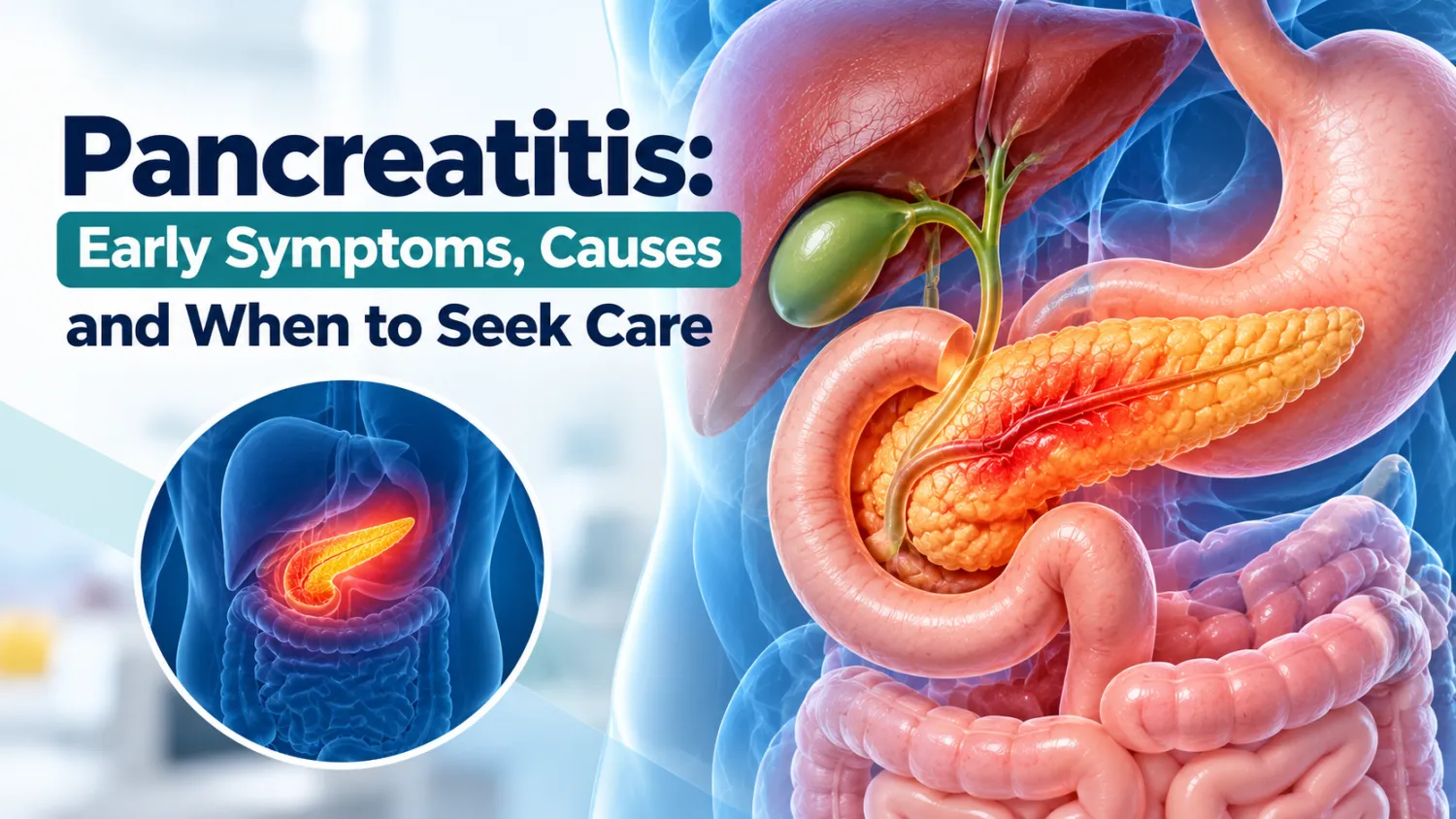
The most important symptom of acute pancreatitis is sudden, severe pain in the upper abdomen, often spreading to the back, usually with nausea and vomiting. If you have this kind of pain, especially if it does not ease within a short time, get medical help the same day. Acute pancreatitis needs hospital assessment and can become serious.
Chronic pancreatitis is different. It develops over years, and its early signs are easy to mistake for ordinary indigestion. This guide explains both, what causes them, how they are diagnosed and where treatment takes place.
What is pancreatitis?
The pancreas is a gland behind the stomach. It makes digestive enzymes that break down food, and hormones, including insulin, that control blood sugar. Pancreatitis means the pancreas is inflamed. It happens when digestive enzymes become active inside the gland and begin to irritate and damage it.
There are two main forms:
- Acute pancreatitis: sudden inflammation, usually lasting days. Most cases are mild and recover with hospital care, but a smaller number become severe, with organ failure or serious local complications.
- Chronic pancreatitis: long-standing inflammation that causes permanent scarring and loss of pancreatic function over time.
Symptoms of acute pancreatitis
- Sudden, severe pain in the upper abdomen, which may spread to the back
- Pain that is constant, often lasts hours to days and may feel worse when lying flat or after eating
- Some relief when sitting up and leaning forward
- Nausea and repeated vomiting
- A tender, swollen or bloated abdomen
- Fever and a fast heartbeat
This differs from the pain of a gallstone attack (biliary colic), which usually settles within a few hours. Persistent pain should be assessed quickly, as gallstones can also be the cause of pancreatitis.
Warning signs that need emergency care
Go to an emergency department without delay if upper abdominal pain comes with any of the following:
- Severe pain that is not easing, or is steadily worsening
- Vomiting that prevents you from keeping down fluids
- Fever or chills
- Yellow eyes or skin (jaundice)
- Breathlessness or rapid breathing
- Dizziness, fainting, a very fast heartbeat or very low urine output
- Confusion or unusual drowsiness
Do not wait to see if painkillers settle it, and avoid taking additional over-the-counter medicines such as anti-inflammatory tablets before you have been assessed.
Symptoms of chronic pancreatitis
Chronic pancreatitis can begin quietly. The symptoms may include:
- Upper abdominal pain that returns in episodes or is persistent, often spreading to the back, and sometimes worse after meals
- Unintended weight loss
- Oily, pale, foul-smelling stools that float and are hard to flush, caused by poor fat digestion (steatorrhoea)
- Bloating, early fullness or nausea
- New or worsening diabetes
These symptoms overlap with other digestive conditions, and persistent upper abdominal pain with weight loss should always be evaluated properly rather than treated as acidity.
What causes pancreatitis?
Acute pancreatitis
In most people a cause can be found. The two most common are:
- Gallstones, which can block the common channel through which the bile duct and pancreatic duct drain
- Alcohol, particularly heavy or long-term use
Other causes include:
- Very high blood triglyceride (fat) levels
- High blood calcium
- Certain medicines
- Complications following ERCP
- Abdominal injury
- Infections and autoimmune disease
- Structural problems of the ducts or tumours blocking the duct
- Inherited (genetic) conditions
In some patients no cause is identified. In older adults, doctors take particular care to exclude a pancreatic or bile duct tumour as the cause.
Chronic pancreatitis
- Long-term alcohol use and smoking, which together increase risk
- Genetic and hereditary forms, which often begin at a younger age
- Recurrent attacks of acute pancreatitis
- Blockage of the pancreatic duct
- Autoimmune pancreatitis
- Tropical calcific pancreatitis, a form of chronic pancreatitis described in parts of India and other tropical regions, which can affect younger people without a history of alcohol use
- No identifiable cause in a number of cases
How is pancreatitis diagnosed?
Acute pancreatitis
Doctors usually diagnose acute pancreatitis when at least two of the following three are present:
- Typical upper abdominal pain
- Blood levels of lipase or amylase more than three times the upper limit of normal (lipase is more specific)
- Findings of pancreatic inflammation on imaging
Other tests help find the cause and judge severity: a complete blood count, kidney and liver function tests, blood sugar, calcium, triglycerides, CRP and oxygen levels. An abdominal ultrasound looks for gallstones. A contrast CT scan is not needed for everyone at the start, but is used when the diagnosis is uncertain or when complications are suspected, usually after the first few days. MRCP or endoscopic ultrasound (EUS) can detect small stones, bile duct problems or tumours.
Chronic pancreatitis
Diagnosis combines symptoms, risk factors and imaging (CT, MRI/MRCP or EUS), which may show calcification, duct changes or shrinkage of the gland. Tests for digestion and function, such as faecal elastase, blood sugar and nutritional blood tests, assess how much the pancreas is still doing. Genetic testing is considered in selected people.
Treatment: where it happens and what it involves
Acute pancreatitis: treatment is hospital-based
Acute pancreatitis is treated in hospital. Mild cases may stay a few days, while severe cases need intensive care. Treatment generally includes:
- Intravenous fluids to support circulation, given carefully and adjusted to your response
- Pain relief
- Nutrition: doctors now encourage restarting oral feeding as soon as it is tolerated, usually within a day or two, rather than keeping people fasting for long periods. A feeding tube may be used when eating is not possible.
- Treating the cause: for gallstone pancreatitis, this may involve ERCP if the bile duct is blocked or infected, and gallbladder removal during the same admission or soon after for mild disease. If alcohol is the cause, stopping alcohol is essential. If triglycerides are very high, they are treated urgently, and medicines responsible are reviewed.
- Monitoring for complications: such as fluid collections, pancreatic necrosis (dead tissue), infection, or organ failure. Antibiotics are not given routinely, only when infection is suspected. Some collections are drained through endoscopic or radiological techniques.
Chronic pancreatitis: long-term management
The goals are to relieve pain, support digestion, protect nutrition and manage complications. Care commonly includes:
- Stopping alcohol and smoking
- Pain control, using a stepwise approach and avoiding long-term reliance on strong opioids where possible
- Pancreatic enzyme replacement tablets or capsules taken with meals, when the pancreas can no longer digest fat adequately
- Dietary advice, usually small, frequent, balanced meals, with enough calories and protein
- Treatment of diabetes and vitamin or mineral deficiencies
- Endoscopic treatment, for example to widen a narrowed duct or remove duct stones, or surgery in selected people with persistent pain or complications
- Regular follow-up, since chronic pancreatitis raises the long-term risk of pancreatic cancer
Treatments differ greatly from person to person, so doses and combinations of medicines should always be set by your own doctor.
Can pancreatitis be prevented?
Not every case can be prevented, but risk can be reduced:
- Avoid heavy alcohol use, and stop smoking
- Treat symptomatic gallstones as advised by your doctor
- Control blood triglycerides, blood sugar and weight with diet, exercise and medicines when needed
- Review long-term medicines with your doctor if you have had pancreatitis
- Take attacks seriously. Recurrent episodes may signal an underlying cause that has not been found.
When to see a gastroenterologist
Book a consultation if you have:
- A previous episode of pancreatitis, or recurring upper abdominal pain
- Pain that spreads to the back, with unexplained weight loss
- Oily stools or ongoing digestive trouble with weight loss
- New diabetes together with abdominal pain or weight loss
- A family history of pancreatitis or pancreatic disease
- A scan or report mentioning pancreatic changes, such as calcification, cysts or duct dilatation
If an attack is happening now, do not wait for an appointment. Go to an emergency department.
Pancreatic care in Faridabad
After the acute attack has been managed, finding the cause and preventing recurrence is where specialist follow-up matters most. Dr. Ram Chandra Soni is a gastroenterologist and hepatologist (MBBS, MD, DM in Gastroenterology) and Chairman of Gastroenterology & Hepatology at Accord Superspeciality Hospital, Faridabad, according to his profile. His profile lists ERCP and endoscopic ultrasound among his procedures, and describes work across the liver, pancreas, gallbladder and digestive tract. You can see more on the services page.
Bring your discharge summary, scan and blood reports, and a list of all medicines and any alcohol use to the first visit. Honest information about alcohol helps the doctor find the cause.
Conclusion
Severe upper abdominal pain that spreads to the back, especially with vomiting, needs urgent assessment. Slow-developing symptoms such as repeated pain, oily stools and weight loss need a proper work-up as well. If you have had pancreatitis or are worried about your symptoms, you can book a consultation for evaluation and follow-up.
This article is for general education and does not replace advice from your own doctor. It is not for use in an emergency. If you think you may have acute pancreatitis, seek emergency care. It must be reviewed and approved by Dr. Soni or a qualified medical reviewer before publication.
Frequently asked questions
Where is pancreatitis pain felt?
Usually in the upper abdomen, in the middle or slightly to the left, often spreading through to the back. It may ease a little when sitting forward and often worsens when lying flat.
Can pancreatitis go away on its own?
Mild acute pancreatitis often improves with hospital care, but it should never be left untreated, because it can worsen and the cause must be found. Chronic pancreatitis does not go away, though symptoms can be managed.
Is pancreatitis always caused by alcohol?
No. Gallstones are one of the two most common causes, along with alcohol. Very high triglycerides, medicines, genetic conditions, autoimmune disease and structural problems can also cause it.
Is acute pancreatitis dangerous?
Most cases are mild, but some become severe, with organ failure or infection of damaged pancreatic tissue. Because severity is hard to predict at the start, hospital assessment is important.
Can I eat normally after pancreatitis?
Many people return to a normal balanced diet after a mild attack, as advised by their doctor. Avoiding alcohol and managing the cause matter most. With chronic pancreatitis, you may need dietary adjustments and enzyme supplements.
Can pancreatitis come back?
Yes, especially if the cause persists, such as continued alcohol use, untreated gallstones or high triglycerides. Treating the cause substantially lowers the chance of recurrence.
Does pancreatitis cause diabetes?
It can. Repeated or chronic inflammation can damage the cells that make insulin. This is why blood sugar is checked during follow-up.
Does pancreatitis increase cancer risk?
Chronic pancreatitis is associated with a higher long-term risk of pancreatic cancer. Most people with pancreatitis do not develop cancer, but regular follow-up and prompt review of new weight loss or jaundice are advised.





 WhatsApp Us