


Seeing blood in the toilet is frightening, and the usual response is to assume it is piles, buy an ointment and hope it settles. Often that is the right guess. Piles are very common, and they are a frequent cause of bright red blood after passing stool.
But blood in the stool is also one of the main warning signs of bowel cancer, and doctors are seeing it more often in younger people. Bowel cancer is rising in India, with experts noting more cases in younger adults. Assuming it is “just piles” without checking can mean losing precious time. This article explains what the common causes are, which signs should not be ignored, and what happens when you see a gastroenterologist.
The usual causes of blood in stool
Blood in the stool has many causes, and most are not cancer:
- Piles (hemorrhoids). Swollen veins in the anus. They typically cause bright red blood that drips or coats the stool or toilet paper, often painless, with or without a lump.
- Anal fissure. A small tear in the anal lining, usually with sharp pain during and after passing stool and a little bright red blood.
- Infections. Bacterial or parasitic infections can cause bloody diarrhea with cramps and fever.
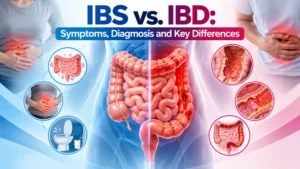
- Colitis. Inflammation of the colon, including ulcerative colitis and Crohn’s disease, often with diarrhea, mucus and abdominal pain. Our article on IBS vs IBD explains how these differ from irritable bowel syndrome.
- Polyps. Small growths in the lining of the colon. Most are harmless, but some can turn into cancer over the years.
- Colorectal cancer. Cancer of the colon or rectum, which can bleed slowly or visibly.
- Bleeding higher up in the digestive tract. Ulcers or other problems in the stomach and food pipe can cause black, tarry stool.
What the color of the blood tells you
Color offers a clue, though never a diagnosis:
- Bright red blood usually comes from low down, such as the anus or rectum.
- Dark red or maroon blood can come from higher in the colon.
- Black, sticky, foul-smelling stool (melena) often means bleeding from the stomach or upper intestine, for example from an ulcer. If you have this, you need to be seen promptly. Our article on H. pylori infection explains one of the common causes of ulcers.
- Blood mixed through the stool with mucus may suggest inflammation of the colon.
Some foods, such as beetroot, and some iron tablets can also change stool color, so do not self-diagnose from color alone.
Signs that should not be ignored
Please arrange a proper evaluation, not just an ointment, if blood in the stool comes with any of these:
- A change in bowel habits that lasts more than two to three weeks, such as new constipation, diarrhea, or a feeling that you have not emptied your bowel
- Thin, pencil-like stools
- Unexplained weight loss or loss of appetite
- Tiredness, breathlessness or paleness, which may be a sign of anemia from slow blood loss
- Persistent abdominal pain or bloating
- A family history of bowel cancer, polyps or inflammatory bowel disease
- Blood that keeps recurring even after treatment for piles
Experts in India have said that symptoms lasting beyond two to three weeks should be evaluated, rather than dismissed as routine digestive problems.
Why age is not a safe excuse
It used to be assumed that bowel cancer was a disease of people over 60. That assumption no longer holds. Doctors are reporting more cases in people in their thirties and forties. Changes in diet, such as more processed food and less fiber, inactivity, obesity and gut changes are thought to play a part.
So a 30-year-old with persistent rectal bleeding deserves the same careful attention as an older person. If your symptoms do not settle quickly, or if anything on the list above applies to you, do not wait.
What happens at a consultation
Dr. Soni will begin with a detailed history: how long the bleeding has been going on, how much, its color, any pain, bowel pattern changes, diet, weight and family history. A physical examination, including a simple examination of the anal area, often comes next. Basic blood tests, including a hemoglobin check, tell us whether the bleeding has caused anemia.
If there is any suspicion beyond piles, the next step is usually a colonoscopy.
Colonoscopy: what to expect
A colonoscopy lets the doctor look directly at the entire lining of the large bowel with a thin, flexible camera. You are given a bowel-cleansing preparation the day before, and the procedure is done under sedation, so you do not feel pain. If a polyp is found, it can usually be removed during the same procedure, and tissue samples can be taken for testing.
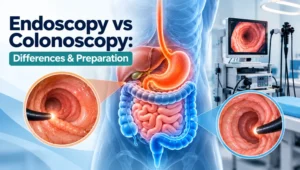
It is one of the few tests that can both detect and prevent cancer, since removing a polyp stops it from growing further. Serious complications are uncommon when it is done by an experienced team. You can read about the colonoscopy service in Faridabad, and about how it differs from an upper endoscopy in our article on endoscopy vs colonoscopy.
If bleeding continues but both an upper endoscopy and a colonoscopy are normal, other tests such as capsule endoscopy can look at the small intestine.
Do I need screening even if I have no symptoms?
In many countries, regular bowel cancer screening starts around age 45. India does not have a national screening program, so decisions are individual. You should discuss screening with a gastroenterologist if you are 45 or older, have a first-degree relative with bowel cancer or polyps, have long-standing ulcerative colitis or Crohn’s disease, or carry a known inherited condition.
Reducing your risk
Nothing guarantees protection, but these habits lower the risk:
- Eat more fiber from vegetables, fruit, pulses and whole grains
- Cut back on processed and red meat
- Stay active and maintain a healthy weight
- Avoid smoking and limit alcohol
- Treat constipation instead of straining
The weight and blood sugar problems that drive fatty liver and the need for a FibroScan also raise bowel cancer risk, so good metabolic health helps in more ways than one.
When to seek urgent care
Go to an emergency department the same day if you have heavy bleeding, feel faint or dizzy, have black stools with vomiting, or have severe abdominal pain with bleeding.
Talk to Dr. Soni
Dr. Ram Chandra Soni (MBBS, MD Medicine, DM Gastroenterology) is Chairman – Gastroenterology & Hepatology at Accord Superspeciality Hospital, Faridabad, and has performed a large number of colonoscopies and other endoscopic procedures. You can book an appointment or call +91 98114 46141.
This article is for general information and does not replace medical advice. If you see blood in your stool, please consult a doctor.





 WhatsApp Us