


Bloating that comes and goes. Loose stools after meals. A stomach that never quite feels settled. Plenty of people live with these symptoms for years and are told, quite reasonably, that it is irritable bowel syndrome (IBS), a common condition with no dangerous cause.
For most, that is the right answer. But for some, the symptoms point to celiac disease, a lifelong autoimmune condition that is far more common than most people realize. Experts in India say celiac disease was once considered rare here and is now diagnosed regularly. An AIIMS community study found it in roughly one in 96 people in northern India. With wheat chapatis on so many plates in North India, the question is worth asking.
What is celiac disease?
Celiac disease is not a food allergy and not simply “gluten intolerance.” It is an autoimmune condition in which eating gluten, a protein found in wheat, barley and rye, triggers the immune system to attack the lining of the small intestine. Over time, the tiny finger-like projections (villi) that absorb nutrients become flattened, and the body cannot absorb food properly.
It runs in families and can appear at any age, from a toddler to a person in their sixties.
The symptoms are wider than most people think
The classic picture is chronic diarrhea, bloating and weight loss. But celiac disease often looks very different, and many people have no obvious stomach symptoms at all.
Digestive symptoms:
- Chronic or recurring diarrhea, or sometimes constipation
- Bloating, gas and abdominal discomfort
- Weight loss or failure to gain weight
- Fatty, foul-smelling stools
Symptoms outside the gut:
- Iron deficiency anemia that does not respond well to iron tablets
- Tiredness and weakness
- Mouth ulcers that keep returning
- An itchy, blistering skin rash, usually on elbows, knees or buttocks
- Bone pain or early thinning of bones
- Tingling in the hands and feet
- Unexplained abnormal liver enzymes
- Delayed puberty, short height or poor growth in children
- Difficulty conceiving or repeated miscarriage
Because the symptoms are so varied, many patients go years before the diagnosis is made.
How IBS differs
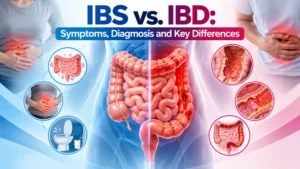
IBS is a disorder of how the gut functions, not of how it looks. People with IBS have recurring abdominal pain linked with bowel movements, along with changes in how often they pass stool or what it looks like. Stress, certain foods and poor sleep often make it worse. The gut looks normal on tests, and there is no damage to the intestine. If you want to see how IBS differs from inflammatory bowel disease, read our article on IBS vs IBD.
The overlap is the trouble. IBS and celiac disease can both cause bloating and diarrhea. A key difference is that IBS does not cause anemia, significant weight loss or malnutrition, whereas celiac disease can.
Warning signs that mean “more than IBS”
A doctor will want to look further if your symptoms come with:
- Weight loss that you cannot explain
- Anemia or low iron, B12 or vitamin D
- Blood in the stool
- Diarrhea that wakes you at night
- Symptoms that began after the age of 50
- A close relative with celiac disease, inflammatory bowel disease or bowel cancer
- Type 1 diabetes or autoimmune thyroid disease, which are more common in people with celiac disease
If you have blood in your stool, our article on blood in stool: piles or colorectal cancer explains why that needs its own evaluation.
How celiac disease is diagnosed
Diagnosis takes two steps.
- A blood test. The first test measures antibodies, usually anti-tissue transglutaminase (anti-tTG IgA), along with a total IgA level. If this is positive, celiac disease becomes likely.
- An upper endoscopy with biopsies. A thin camera is passed through the mouth to the first part of the small intestine, and small samples of tissue are taken. Under the microscope, the flattened villi confirm the diagnosis. You can read about the endoscopy service in Faridabad and how it differs from other scopes in our article on endoscopy vs colonoscopy.
The endoscopy is done under sedation, takes only a few minutes, and most people go home the same day.
Important: do not stop gluten before testing
This is the most common mistake we see. People feel better after cutting out wheat, stop eating gluten on their own, and then go for testing. The problem is that the tests only work if you have been eating gluten regularly. If you stop first, the antibodies fall and the biopsy can look normal, and the diagnosis can be missed.
If you suspect celiac disease, keep eating normal amounts of gluten until the tests are done, and speak to your doctor about how long to continue.
What about gluten sensitivity?
Some people feel bloated or tired after eating wheat, yet their celiac tests are negative and their intestine looks normal. This is sometimes called non-celiac gluten sensitivity, and the cause is not always gluten itself. Other components of wheat, such as certain fermentable carbohydrates, may be responsible. It is not dangerous in the way celiac disease is, but it does deserve a proper assessment, and not self-diagnosis.
Treatment: a strict gluten-free diet
There is no tablet that treats celiac disease. The treatment is a lifelong, strict gluten-free diet, and it works well. For most people, symptoms improve within weeks, the intestine heals over months, and the long-term risks fall.
Practical points:
- Avoid wheat, barley and rye, including chapati, naan, bread, semolina (suji), vermicelli, many biscuits, and some sauces and processed foods.
- Naturally gluten-free foods are plenty: rice, most pulses, vegetables, fruit, milk, eggs, meat, fish, and flours such as besan, ragi, jowar, bajra and rajgira.
- Read labels carefully, because gluten hides in packaged food. Even small amounts can cause damage.
- Watch for cross-contamination in shared kitchens, toasters and cooking oil.
- Work with a dietitian, at least early on. A gluten-free diet done poorly can leave you short of fiber, iron and B vitamins.
- Do not use over-the-counter “digestive” products as a substitute for avoiding gluten.
Your doctor will also check and correct any deficiencies, such as iron, calcium, vitamin D and B12, and may recommend a bone health check.
Why a diagnosis matters
Untreated celiac disease can lead to long-term problems such as weak bones, persistent anemia, fertility trouble, and in rare cases serious complications of the intestine. A correct diagnosis, on the other hand, gives you a clear path to feeling better. And since celiac disease runs in families, parents, siblings and children of a diagnosed patient should be offered screening, even if they have no symptoms.
What if the tests are negative?
If celiac tests are normal, IBS is far more likely. It can be managed with dietary adjustments, stress management, regular meals, enough sleep and exercise, and medicines for specific symptoms. Sometimes a closer look for other causes, such as infection, lactose intolerance or an acid-related condition, is also helpful. Our article on why acidity keeps coming back despite medicines is useful if you have upper abdominal symptoms too.
Talk to Dr. Soni
Dr. Ram Chandra Soni (MBBS, MD Medicine, DM Gastroenterology) is Chairman – Gastroenterology & Hepatology at Accord Superspeciality Hospital, Faridabad. If you have had bloating, diarrhea or weight loss for weeks or months, or an unexplained anemia, book an appointment or call +91 98114 46141.
This article is for general information and does not replace medical advice. Please do not start a gluten-free diet before testing without speaking to your doctor.








 WhatsApp Us